
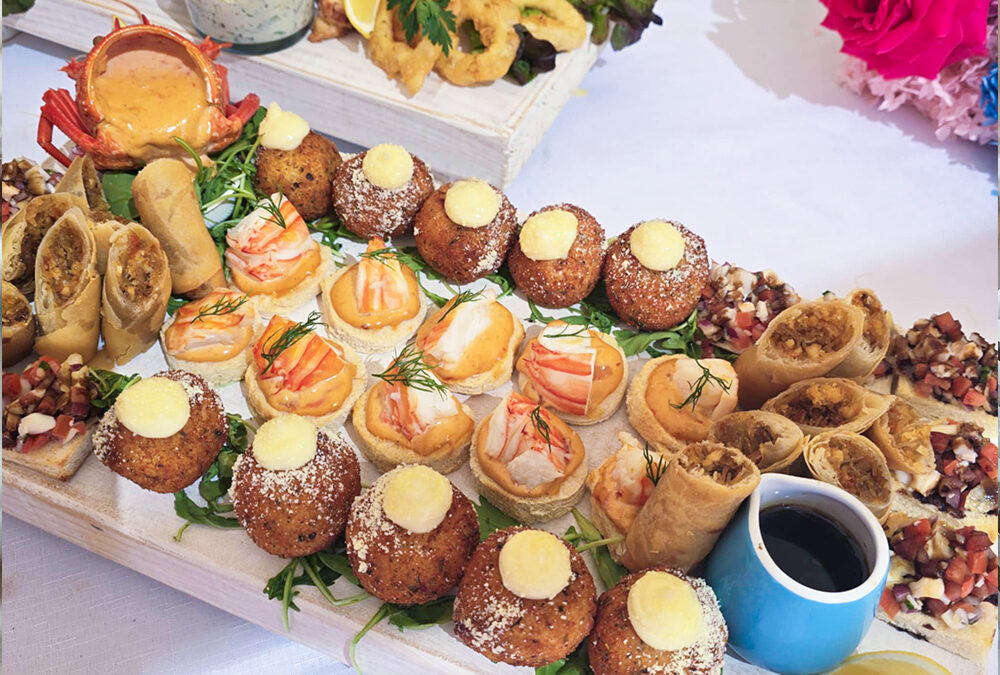
Ask the people who eat lobster most often what they serve alongside it and the answer is startlingly consistent. Melted butter. That is the list.
Push a little harder and you might get corn on the cob and some potatoes. Push harder still and someone will suggest the correct side dish for lobster is a second lobster.
That is not laziness. It is the accumulated wisdom of people who have worked out that a lobster meal is ruined far more often by too much than by too little. Here is how to build the rest of the plate around it without burying the thing you paid for.
The Rule That Decides Everything
Lobster has a delicate flavour, and that is chemistry rather than opinion. Analysis of seafood flavour compounds identifies free amino acids such as glycine and glutamic acid, along with taste active nucleotides, as the drivers of that mild sweetness. They are subtle compounds, and they are easily buried.
Butter complicates it further in an interesting way. Work on the aroma compounds in butter shows it is anything but neutral, and fat also changes how other flavours are released on the palate. Butter is already doing a great deal of work on that plate, which is another reason not to pile more on.
So the job of a side dish here is not to be interesting. It is to fill the plate, soak up butter and get out of the way. Judged on that, a bowl of boiled potatoes outperforms almost anything you could spend an afternoon on.
The Sides That Actually Work
Corn On The Cob
The most recommended accompaniment there is, and for good reason. Sweet, simple, and it takes butter beautifully, so the same butter serves both. It also suits eating with your hands, which a whole lobster demands anyway.
Potatoes, Almost Any Way
Small boiled potatoes with a little salt and butter are as close to a perfect lobster side as exists. Potato salad works just as well and can be made hours ahead. Roast potatoes are fine if you want something warmer.
What potatoes give you is substance without flavour competition. Starchy foods are mild and they absorb fat and juices, which is precisely the job here.
Crusty Bread
Underrated and the cheapest thing on this list. Good bread mops up butter and juices, stretches the meal, and requires no cooking whatsoever.
A Plain Green Salad
Leaves, a squeeze of lemon, a little olive oil, salt. Nothing more. Resist the urge to add feta, olives, dried cranberries or anything else that pulls attention. The salad is there to cut richness, not to make a statement.
Lemon is the conventional choice with seafood for exactly that contrast, though it is worth saying this is long standing culinary practice rather than something anyone has measured. It works, and cooks have agreed it works for a very long time.
Something Small To Start
The traditional structure is a small shellfish starter before the lobster arrives. Half a dozen oysters, a few prawns, some marinated mussels. It sets the tone and stops people arriving at the main event ravenous.
What To Avoid
Worth being direct, because these are the mistakes people make when they are trying hardest.
|
Avoid |
Why |
Do this instead |
|---|---|---|
|
Chilli and heavy spice |
Competes hard with a subtle flavour |
Lemon, black pepper, a little salt |
|
Heavy garlic in the sides |
Fine in the butter, too much on the plate |
Keep garlic to one element only |
|
Strong cheeses |
Loaded with intense volatile compounds that dominate |
Leave cheese out of the meal |
|
Vinegar heavy dressings |
Acidity measurably suppresses perceived sweetness |
Lemon juice and oil, lightly |
|
Rich creamy pasta |
Competes for the same space as the butter |
Potatoes or bread |
|
Too many dishes |
Splits attention and stresses the cook |
Two sides, maximum |
The chilli one deserves a caveat, since it is the most commonly asserted and the least settled. Studies do find that capsaicin affects aroma release and perception, and some report suppression of sweetness specifically, but the picture is not uniform. Treat it as a sensible precaution with a delicate ingredient rather than a proven rule.
The acidity point is firmer. Sensory studies consistently show that acids reduce perceived sweetness, which is exactly the quality you are paying for in a lobster.
The Australian Version
Most northern hemisphere lobster advice assumes a cold evening and a kitchen. Here it is usually warm, usually outside, and often near a barbecue.
That changes things sensibly rather than dramatically.
- Grill the corn rather than boiling it. Work comparing cooking methods for corn shows the higher surface temperatures of dry heat develop aroma compounds that boiling does not, and it suits the setting.
- Serve the potato salad cold and make it in the morning while it is still cool.
- Add a bowl of lemon wedges and let people help themselves rather than dressing anything.
- Put the butter in a jug so it stays warm and everyone can pour their own.
- Do not fuss over plating. A lobster meal shared at a table beats an assembled plate every time.
Keep An Eye On The Heat
One genuine warning for outdoor eating in an Australian summer. Seafood safety guidance is clear that cooked ready to eat seafood should not sit out for long, and that the risk rises sharply in warm ambient conditions. Keep the lobster cold until you serve it, and do not leave the leftovers on the table through the afternoon.
What To Drink
Western Australia makes exactly the right wines for this without anyone having to import an idea. Crisp, higher acid whites with little oak are the conventional shellfish pairing, because the acidity refreshes between mouthfuls rather than adding another flavour. Margaret River is on the doorstep and produces exactly that in its chardonnay and its sauvignon blanc semillon blends.
If wine is not your thing, cold beer works, and so does sparkling water with lemon. Nothing sweet.
How Much Of Everything
Lobster is expensive, so getting the proportions right matters more here than at an ordinary meal.
- Know the yield. Rock lobster yields roughly 35 percent of its live weight as edible meat, sometimes a little more on smaller animals. A kilogram lobster is not a kilogram of dinner.
- Allow one lobster per person if it is the centrepiece, or half each with a decent starter.
- Be generous with the cheap things. Bread, potatoes and corn are what stop people leaving hungry.
- Two sides is plenty. Three starts to look like a buffet and pulls focus.
- More butter than you think. Nobody has ever complained about this.
Ease Is A Legitimate Reason
One last argument for keeping it simple, and it is a practical one rather than a culinary one.
Lobster wants attention at the last minute, and it goes from perfect to overcooked in a very short window. If you are also trying to finish three hot side dishes at the same moment, something is going to suffer, and it will be the expensive thing.
Sides that can be made ahead are not a compromise, they are what allows you to concentrate on the part that needs you. Just keep them properly chilled until serving, since food safety guidance on things like potato salad is quite specific about refrigeration and about limiting time out of the fridge.
What The Research Actually Shows
- Lobster’s sweetness is chemically identifiable, driven by free amino acids and nucleotides, and it is subtle enough to be masked easily.
- Acidity suppresses sweetness. Well established in sensory studies, which is the strongest argument against vinegary sides.
- Rock lobster yields about 35 percent of live weight as meat, which is the number to plan portions around.
- Butter is not neutral. It carries its own aroma compounds and changes how other flavours release, so it is already a major ingredient.
- Grilled corn develops more flavour than boiled, through the same browning chemistry that suits grilled lobster.
- Warm weather is a genuine food safety issue for cooked seafood, and Australian conditions make that more than a technicality.
- High acid whites are the conventional shellfish pairing, and Western Australia produces them locally.
- The chilli claim is softer than people assume. Capsaicin does affect flavour perception, but the evidence is mixed rather than emphatic.
What To Do Next
If you are cooking at home, keep it to butter, something starchy and something green, and spend the effort you save on getting the lobster right.
To get the lobster itself, have a look at our products. Our production process is worth a read if you want to understand what you are actually getting and how much meat to expect.
If the whole business sounds like more work than you want on the day, our beachfront restaurant serves the meal already assembled, and you can book a table in a couple of minutes. For larger groups and celebrations, our functions options handle the catering side entirely.
We are in Cervantes, about two hours north of the city, and the drive up makes a comfortable day out. You can read our story if you would like to know who is cooking.
The Short Version
- Melted butter is genuinely most of the answer.
- Lobster’s sweetness is subtle and easily masked, so sides should stay out of its way.
- Corn, potatoes, good bread and a plain green salad are the classics for a reason.
- Start with a little shellfish rather than adding another main.
- Avoid strong cheese, heavy garlic and vinegary dressings. Go easy on chilli.
- Two sides is plenty. Three is a buffet.
- Plan for about 35 percent yield, and be generous with the cheap things.
- Choose sides you can make ahead, keep them cold, and concentrate on not overcooking the lobster.
The best lobster meal is the one where the lobster is clearly the point and everything else knows its job.