
Here is something worth admitting up front about lobster seafood generally, and rock lobster in particular. The flavour is delicate. Mild, faintly sweet, lightly briny, closer to a very good white fish than to anything strong.
Which means it is easily overwhelmed. Ask people what lobster tastes like and a surprising number will describe garlic butter, because that is genuinely what they have been tasting. The animal is the texture and the backdrop, and whatever you put on it is the foreground.
That is why the same lobster, from the same boat, on the same day, can be three completely different meals. Here is what each method actually does to it.
What You Are Actually Tasting
Two things carry the eating experience, and cooking method affects them differently.
The first is texture, and this is the part people genuinely prize. Properly cooked, there is a slight resistance as you bite through, then a springy, juicy interior. Get it wrong and that becomes either mushy or rubbery, with very little middle ground.
The second is a subtle sweetness with a clean sea character. That is not vague impression, it is measurable. Reviews of the flavour molecules in seafood identify free amino acids such as glycine, along with taste active nucleotides, as the main drivers of that characteristic sweetness in shellfish.
It is not a strong flavour and it was never going to be. So the question is not which method makes lobster taste best. It is how much of the lobster you want to taste, and how much margin for error you are willing to give yourself.
Boiling
The default nearly everywhere, and the method most likely to cost you flavour.
Those flavour compounds are water soluble, and submerging the meat in a large volume of water gives them somewhere to go. Studies comparing cooking methods in crustaceans find that boiling leaves fewer free amino acids in the flesh, with more of them ending up in the cooking liquid instead.
It is not a bad method, and it is the easiest way to handle a big whole lobster evenly. Just understand the trade. Salt the water properly so it tastes of the sea, and take it out sooner than feels right.
Best for
Large whole lobsters, cooking several at once, and any preparation where the meat is coming out of the shell for something else.
Steaming
The same gentle approach with much less leaching, because the meat is not sitting in water.
Research on steaming and nutrient retention in seafood supports the general principle that less direct water contact means less is lost from the flesh. You keep more of the natural flavour and the texture stays firmer.
It is a little slower than boiling and slightly less even on a very large animal, but for most purposes it is simply the better version of the same idea.
Best for
Anyone who wants a clean, unadulterated result and intends to serve it simply with lemon and a little butter on the side rather than poured over.
Grilling And Barbecuing
This is where the flavour genuinely changes rather than merely surviving, and it is what suits rock lobster best.
Dry heat browns the surface of the meat, and browning creates flavour compounds that simply are not present in a boiled lobster. That is chemistry rather than seasoning. Work on developing grilled flavour in shellfish through the Maillard reaction shows how those roasted, savoury notes are generated, and comparisons of cooking methods on volatile flavour compounds find dry heat produces a markedly different aroma profile from wet heat.
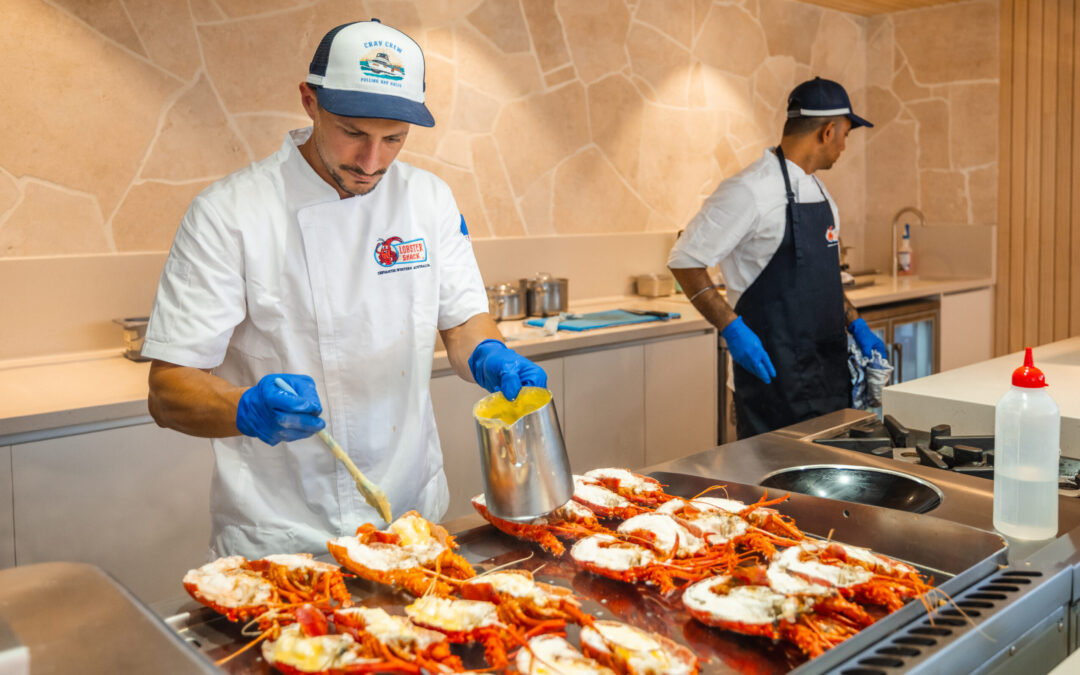
Rock lobster is well suited to it because the tail meat is firm enough to hold together over direct heat. Split the tail down the middle, brush the flesh lightly, and leave it in the shell. The shell acts as a heat shield and helps keep the meat from drying out.
Best for
Western rock lobster tails, outdoor cooking, and anyone who wants the most flavour development available.
Baking, Mornay And Thermidor
Very popular, genuinely delicious, and worth being honest about.
These sauces are built from butter, cream, cheese, mustard and wine or sherry. They are rich and flavour forward, and against a mild base like lobster they will lead rather than accompany. Exactly how much of the lobster still comes through is a matter of judgement and proportion rather than something anyone has measured, but nobody eating a good mornay is in much doubt about which flavour is in charge.
There is nothing wrong with that. Just know what you have chosen. If you have paid for a premium lobster because you wanted to taste the lobster, this is not the preparation that delivers it. If you are feeding people who find plain seafood dull, it is exactly the right call.
Best for
Crowd pleasing, colder weather, and making a smaller amount of lobster feel like a substantial meal.
Poaching In Butter
Gentle, forgiving and luxurious. Poaching happens below boiling point, and professional guidance is consistent that lower temperature cooking keeps the proteins from tightening, which is exactly what toughens seafood.
Flavour wise it is a compromise. You keep more of the lobster than boiling gives you, but the butter is unmistakably part of the result. Most people consider that a fair exchange.
Best for
Nervous cooks, because the lower temperature widens the window between undercooked and ruined considerably.
Which Method Should You Choose?
| Method | How much lobster you taste | Texture result |
Room for error |
|---|---|---|---|
| Boiling | Least, some flavour goes into the water | Softer, can be washed out | Narrow |
| Steaming | High, very little is lost | Firm and clean | Narrow |
| Grilling | High, plus new flavours from browning | Firm with a caramelised surface | Narrow, and it happens fast |
| Mornay or thermidor | Least, the sauce leads | Soft, rich | Wide, the sauce hides a lot |
| Butter poaching | Moderate to high | Silky and tender | Widest |
The Thing That Ruins It, Whatever You Choose
Overcooking. Every time.
Heat makes the muscle proteins denature and contract, water holding capacity drops, and the moisture is squeezed out. Lobster reaches that point quickly, and the difference between perfect and disappointing can be a minute or two.
Which is why so many people conclude lobster is overrated. They are not wrong about what they ate. Dense, spongy, faintly rubbery lobster is not what lobster is like, it is what overcooked lobster is like, and it is the most common way an expensive ingredient gets wasted.
The fix is to stop cooking by time. Food safety guidance gives the visual marker plainly, that lobster flesh should turn pearly and opaque, with translucency meaning it needs longer. Better still, use a thermometer. Most cooks aim for the mid to high 130s Fahrenheit for texture, while food safety guidance uses a higher figure, so decide which you are optimising for and be deliberate about it.
What The Research Actually Shows
- Boiling really does cost you flavour. Measured in crustacean studies, with free amino acids ending up in the water rather than the meat.
- Steaming retains more, for the straightforward reason that the flesh is not immersed.
- Grilling creates flavour that did not exist before. Maillard chemistry generates roasted, savoury compounds that wet heat cannot produce.
- The sweetness is chemically identifiable, driven by free amino acids such as glycine and by taste active nucleotides.
- Overcooking has a clear mechanism. Proteins contract, water holding capacity falls, and the texture goes.
- Opaque flesh is the doneness marker, and a thermometer beats a timer.
- The shell is useful on a grill, acting as a shield against direct heat.
- Rich sauces lead rather than accompany, though how completely they mask a mild base is a matter of proportion rather than something anyone has quantified.
What To Do Next
If you want to taste what the animal actually tastes like, keep it simple. Steam or grill it, season it properly, and put the butter on the side so you can decide how much of it you want.
To cook one yourself, have a look at our products. If you would rather not gamble a good lobster on a narrow window, our beachfront restaurant cooks them every day, which is the whole difference between knowing the theory and getting it right.
How a lobster is handled and cooked before it reaches you matters too, and our production process covers that side of it. Our factory tours show it in person.
You can read our story and about Cervantes, where we are, or simply book a table.
The Short Version
- Lobster has a delicate flavour, so the cooking method and the sauce decide most of what you taste.
- Boiling costs you flavour, because water soluble compounds leach into the pot.
- Steaming is the better version of the same gentle approach.
- Grilling adds flavour rather than preserving it, through browning, and suits firm rock lobster tails.
- Leave the shell on over direct heat. It works as a heat shield.
- Mornay and thermidor are delicious and they lead rather than accompany.
- Butter poaching is the most forgiving method if you are nervous.
- Texture is what people prize, and overcooking destroys it in about a minute.
- If you thought lobster was overrated, you probably ate it overcooked.
Decide how much of the lobster you want to taste, then pick the method that gets you there.