
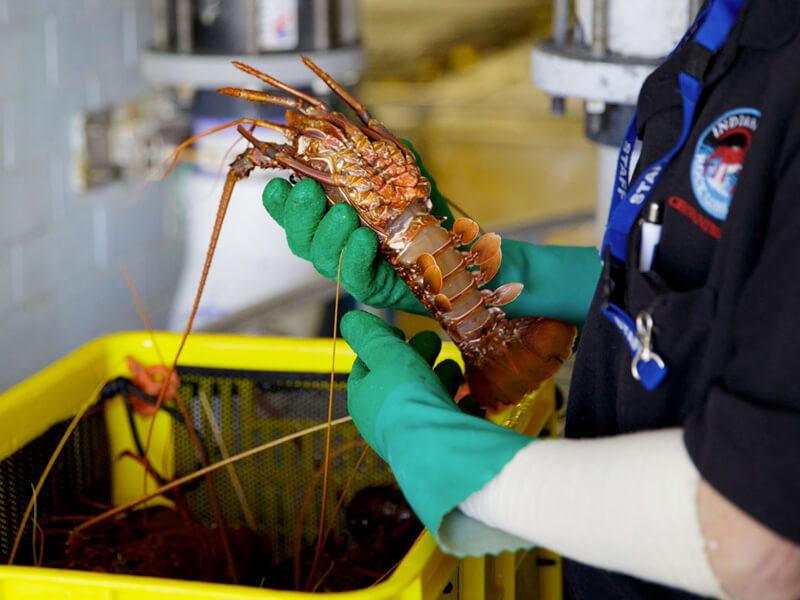
Most advice about buying fresh lobster stops at smell it and check it moves. Both are true and neither is enough, because fresh and good quality are two different questions.
A lobster can be caught this morning, handled perfectly, and still be watery and disappointing on the plate. That is not a freshness problem. It is a timing problem, and almost nobody explains it.
Here is how to judge a live one, a cooked one and a frozen tail, what an ammonia smell actually means, and the one thing that separates a good lobster from a merely fresh one.
Fresh And Good Are Not The Same Thing
Start with the thing nobody tells you. Lobsters grow by moulting, shedding the old shell and forming a larger one underneath, which is soft at first and hardens over time.
Straight after that happens the animal has taken on water to swell into its new size, and the meat has not caught up. Research on moulting patterns and shell quality describes how new tissue only slowly replaces that water, and how soft shelled lobsters carry less protein than hard shelled ones.
So a lobster in that state gives you less meat, and what meat there is can be soft and watery. None of that means the animal is old or badly handled. It was simply caught at the wrong point in its own cycle. Which is why the single most useful thing you can do with your hands is press the shell.
The Shell Test
- Hard shell. Firm, solid, no give when you squeeze the sides. This is what you want, and hard shelled lobsters are consistently reported to carry a meaningfully higher meat yield.
- Soft or slightly yielding shell. The animal has moulted recently. Expect less meat and a softer texture.
- Heavy for its size. Pick two of similar length and take the heavier one. Weight relative to size is a good proxy for how full it is.
Buying A Live One
If it is in a tank, you have the easiest job of all, because the animal will tell you itself.
- It should react. Picked up or nudged, a healthy lobster moves its legs, flicks its tail and objects to the whole business.
- The tail should curl under, not hang. A limp tail hanging straight down is a bad sign.
- Antennae should be intact and moving. Heavy damage suggests a long time in a crowded tank.
- Lively beats large. Given a choice between an impressive sluggish one and a smaller animal fighting you, take the fighter.
If a live lobster is sluggish, it should be cooked straight away rather than kept. If it is not responding at all, do not buy it.
Why Live Matters So Much
This is worth understanding rather than just obeying. Food safety guidance is explicit that live lobsters spoil rapidly once dead and should be cooked the same day they are bought, and work on bacterial changes in chilled lobster shows how quickly that process gets underway.
That is why lobster is sold live in tanks when so little else is, and why a dead uncooked lobster of unknown age is not a bargain at any price.
Buying It Cooked
Most people in Western Australia buy their lobster already cooked, which changes what you are looking for entirely.
| What to check | Good sign | Walk away |
|---|---|---|
| Smell | Clean, mild, like the sea | Sour, fishy or any hint of ammonia |
| Tail position | Curled firmly under the body | Straight or loosely hanging |
| Shell colour | Bright, even, glossy | Dull, patchy or greyish |
| Meat appearance | White and opaque, firm | Yellowing, black spots, translucent patches |
| Feel of the meat | Springs back when pressed | Stays dented, mushy or slimy |
| Weight | Heavy for its length | Surprisingly light |
The press test is the most transferable of those. Seafood selection guidance is consistent that fresh flesh is firm and elastic and springs back after gentle pressure, and that an indentation which stays put means the product is past its best.
The Tail Curl Test
This one is worth knowing, with a caveat. The traditional trade rule is that a lobster alive when it went into the pot curls its tail tightly under the body as it cooks, and that curl stays afterwards. A straight, relaxed tail is taken to mean the animal was dead before cooking.
Treat it as a long standing rule of thumb rather than something anyone has formally tested. It is widely used by people who handle lobster for a living, which is worth something, but it is not the test to rely on if the smell is telling you something different.
What Ammonia Actually Means
Everyone says avoid anything smelling of ammonia and almost nobody says why, so it gets treated as one bad smell among several. It is more specific than that.
An ammonia smell means proteins in the flesh have started breaking down. Research on crustacean spoilage links advanced decay to a strong ammonia odour and rising volatile nitrogen, so it is a chemical signal rather than an aesthetic one. That is a different situation from a lobster that is simply not at its best.
What you want instead is a clean, faintly sweet sea smell. International guidance on fresh and spoiled fish and shellfish sets out the progression clearly, and food safety advice is blunt that fishy, sour or ammonia like odours mean it should not be eaten. Good seafood smells like the ocean rather than like a harbour at low tide.
Frozen Tails
Frozen is not a compromise if it was frozen properly and quickly. What ruins frozen lobster is almost always what happened after freezing rather than the freezing itself, and Australian guidance on frozen seafood quality covers what to look for.
- Look for large ice crystals inside the packaging. These suggest the product has partially thawed and refrozen, or at least been stored poorly.
- Check for freezer burn. Dry, whitish or papery patches are surface dehydration, and the texture underneath will have suffered.
- Avoid discoloured meat. Black spots or yellowing are the same warning signs as on fresh product.
- The tail should be intact and firm, not soft or slumped in the pack.
- Thaw it slowly. Guidance on freezing and thawing seafood recommends the refrigerator rather than water or the bench, because slow thawing preserves texture and moisture.
Ask The Person Selling It
The most effective technique is the one people are too polite to use. Ask whoever is selling it what they look for.
Almost everyone who handles seafood for a living is pleased to be asked, and will happily tell you what came in when, which ones are hard shelled, and which they would take home themselves. It is a far better guide than anything you can work out through glass.
It also explains why buying from somewhere that handles lobster daily produces better results than buying from somewhere that carries it occasionally. Turnover is quality, because nothing sits for long.
After You Buy It
- Live lobster should be kept cold and damp rather than submerged. Australian handling guidance is specific that fresh water will kill them, so damp cloth or newspaper in the fridge, never a bucket of tap water.
- Cooked lobster in the shell keeps around three days refrigerated in a sealed container, with cold storage guidance putting cooked shellfish in the three to four day range.
- Picked meat keeps slightly longer than meat left in the shell.
- Do not refreeze anything that has already been thawed.
- Cook it gently. Rock lobster firms up fast, so the most common way to ruin a good one is simply leaving it on too long.
What The Research Actually Shows
- The moult cycle genuinely drives quality. Documented in fisheries research, with soft shelled animals carrying more water and less protein.
- Hard shell means more meat. Consistently reported across industry and research sources, which is why the squeeze test works.
- Dead lobster deteriorates fast. Food safety guidance says cook the same day, and bacterial studies show why.
- Ammonia is a chemical signal of spoilage, tied to protein breakdown and volatile nitrogen rather than being merely unpleasant.
- The press test is standard guidance. Firm and elastic is fresh, and a lasting dent is not.
- Fresh water kills live lobsters. Stated plainly in Australian handling guidance, and a common and expensive mistake.
- Slow thawing preserves texture. Refrigerator thawing beats water or bench thawing.
- The tail curl test is trade lore rather than tested science. Widely used and probably sound, but not something to lean on over your nose.
What To Do Next
If you want to see what good handling actually looks like, our lobster production process covers what happens between the pot and the plate, and our factory tours let you watch it happen.
To buy some, have a look at our products. If you would rather someone else did the cooking, our beachfront restaurant serves them fresh every day, which is the simplest way to find out what a properly handled one is supposed to taste like.
We are in Cervantes, right where the boats come in, and the drive up from Perth takes about two hours. You can read our story if you want to know who is handling your lobster, or book now if you have read enough.
The Short Version
- Fresh and good are different questions. A perfectly fresh lobster caught near moulting will still disappoint.
- Squeeze the shell. Hard shell means a full tail. Soft shell means a recent moult and less meat.
- Heavy for its length beats long every time.
- A live one should fight you. Sluggish means cook it now, unresponsive means leave it.
- Ammonia means the proteins have started breaking down. Walk away.
- You want a clean sea smell, not no smell and definitely not a fishy one.
- Never keep a live lobster in fresh water. Cold and damp only.
- Ask the person selling it what they look for. They will tell you.
Use your hands and your nose before your eyes. The shell and the smell will tell you almost everything worth knowing.