
Western Australia’s rock lobsters are among the most prized seafood species on the planet, yet many visitors and seafood lovers don’t fully understand what sets them apart from lobsters caught elsewhere. Whether you’re planning a coastal day trip to Cervantes or simply curious about the crustacean on your plate, the differences between WA rock lobsters and their international counterparts go far deeper than geography.
Lobsters found in Western Australian waters belong to an entirely separate biological family compared to the clawed varieties most people picture when they hear the word “lobster.” That distinction shapes everything from their appearance and behaviour to their flavour, texture, and the way they’re caught. Understanding these differences enriches the experience of tasting them, and it helps explain why WA’s rock lobster fishery has earned a global reputation for quality and sustainability.
Why Are WA Rock Lobsters a Completely Different Species
What Family Do Rock Lobsters Belong To
WA rock lobsters, sometimes called spiny lobsters or crayfish locally, belong to the family Palinuridae. This family is genetically distinct from the Nephropidae family, which includes the clawed lobsters found in the North Atlantic, such as those from Maine and the Canadian Maritimes. As the Western Australian Museum notes, although the two groups superficially resemble each other, they are not closely related and sit far apart on the evolutionary tree. It is worth being a little careful here, though. While these families clearly diverged long ago and interbreeding between them is highly unlikely, the available evidence does not definitively confirm that cross-breeding is biologically impossible, so it’s fairer to say they are simply very distantly related rather than to claim it absolutely cannot happen.
You may also see claims that the two families differ neatly in chromosome count. The picture is more complicated than that. Chromosome studies of spiny lobsters actually report high and variable numbers across species rather than a single tidy figure, so chromosome counts are best treated as an area where the science is still emerging rather than a clean point of difference. The simpler takeaway holds true regardless. Calling both animals “lobsters” is a convenience of common language rather than a reflection of close biological kinship, a bit like grouping dolphins and sharks together simply because they both swim in the ocean.
How Does This Genetic Difference Show Up Physically
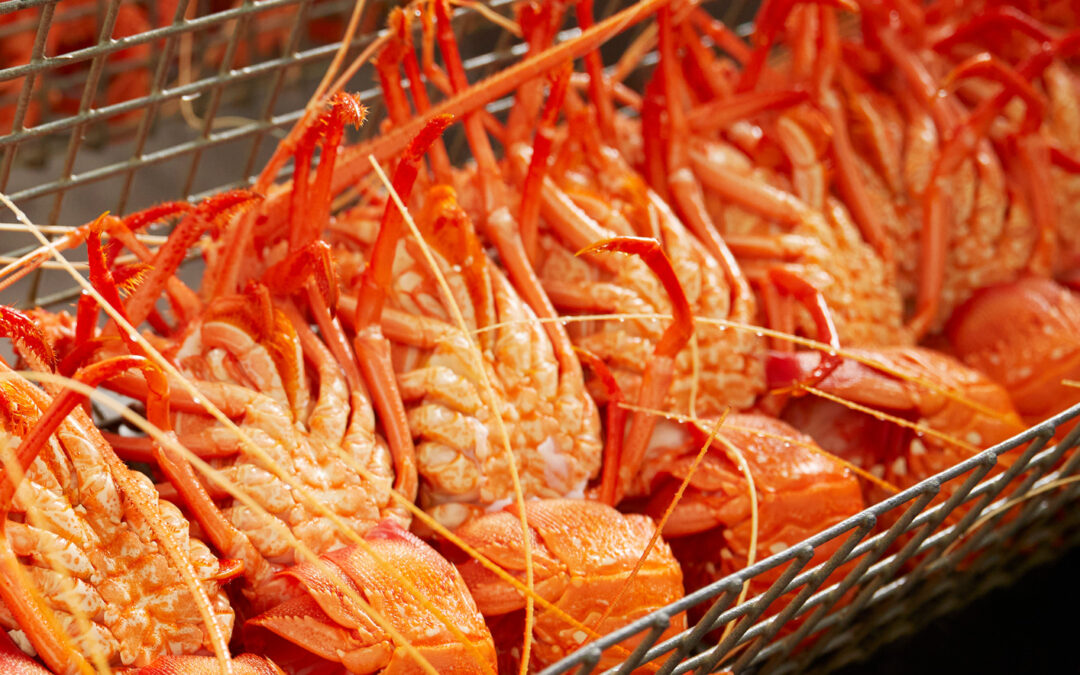
The most obvious physical distinction is the absence of large front claws. WA rock lobsters have long, thick antennae and a heavily armoured, spiny shell instead of the oversized pincers you’d see on a clawed lobster. This is well documented. The Aquarium of Western Australia and the Sydney Fish Market both describe the western rock lobster by its very long, spiky antennae, hard spiny carapace, and lack of the large claws found on true lobsters. Their body shape is also subtly different, with a proportionally larger tail that contains more of the prized meat.
- No claws – Rock lobsters rely on their spiny exoskeleton and powerful tail flick for defence rather than crushing claws
- Longer antennae – These can be as long as the lobster’s body and are used for sensing the environment and deterring predators
- Vibrant colouring – WA’s western rock lobster (Panulirus cygnus) ranges from deep reddish-brown to pale pink depending on habitat depth and moult cycle
- Larger tail-to-body ratio – More tail meat per animal compared to many clawed species
What Species of Rock Lobster Are Found in Western Australia
Two main species dominate WA’s rock lobster landscape, each with its own characteristics and culinary profile.
Western Rock Lobster – Panulirus cygnus
This is the flagship species of the WA fishery and the one most commonly enjoyed in Cervantes and along the Coral Coast. Panulirus cygnus is endemic to Western Australia, meaning it is found nowhere else in the world. This is confirmed by the national Status of Australian Fish Stocks report, which records the species as occurring only in WA. It thrives in the temperate to subtropical waters from roughly Shark Bay down to Cape Leeuwin, with the mid-west coast around Cervantes and the Abrolhos Islands being prime habitat.
Western rock lobsters are typically caught in baited pots laid on the seafloor. The commercial season and recreational rules are tightly managed by the Western Australian government, and the fishery was the world’s first to receive Marine Stewardship Council (MSC) certification, back in 2000. The Marine Stewardship Council records that the fishery became the first in the world to earn MSC certification in March 2000, and that certification has been maintained continuously, reflecting rigorous stock management.
Southern Rock Lobster – Jasus edwardsii
Found in the cooler southern waters of WA as well as South Australia, Victoria, Tasmania, and New Zealand, the southern rock lobster is generally paler in colour and inhabits deeper, colder reefs. This southern temperate distribution is described by fisheries authorities including NSW fisheries information on the species. While it shares the same family classification as the western species, it belongs to a different genus (Jasus versus Panulirus) and has its own distinct flavour profile, often described as slightly sweeter and more delicate.
|
Feature |
Western Rock Lobster (Panulirus cygnus) |
Southern Rock Lobster (Jasus edwardsii) |
North Atlantic Clawed Lobster (Homarus americanus) |
|---|---|---|---|
|
Family |
Palinuridae |
Palinuridae |
Nephropidae |
|
Claws |
None |
None |
Two large crushing and cutting claws |
|
Primary habitat |
WA mid-west coast, temperate to subtropical |
Southern Australia and New Zealand, cold water |
North Atlantic, cold water |
|
Key flavour notes |
Sweet, firm, slightly nutty |
Delicate, sweet, tender |
Rich, buttery, softer texture |
|
MSC certified fishery |
Yes, since 2000 |
Yes, in some jurisdictions |
Varies by region |
|
Meat distribution |
Predominantly in the tail |
Predominantly in the tail |
Claws, tail, and knuckles |
How Does the Flavour of WA Rock Lobster Compare
What Gives Rock Lobster Its Distinctive Taste
Because rock lobsters lack large claws, the eating experience centres almost entirely on the tail. The meat is firmer and more compact than clawed lobster meat, with a clean sweetness that pairs beautifully with simple preparations. This distinction is widely recognised by seafood specialists, who note that rock lobster meat tends to be denser and firmer while clawed lobster is prized for its more tender claw meat. Many chefs argue that the best way to enjoy WA rock lobster is with minimal interference, perhaps grilled with a squeeze of lemon or served with drawn butter and a crisp salad.
The texture difference matters more than some diners expect. Clawed lobster meat from the crusher and cutter claws tends to be softer and more fibrous, while rock lobster tail meat holds together well when cooked, making it versatile for grilling, poaching, or even serving raw as sashimi. The slightly nutty undertone in western rock lobster is attributed to the animal’s diet, which includes a mix of coralline algae, small invertebrates, and other reef organisms specific to WA’s limestone reef systems.
Does Freshness Make a Real Difference
Absolutely. Lobsters of any species taste best when they’re as fresh as possible, and this is one of the advantages of eating rock lobster close to where it’s caught. Taste comparisons consistently find that freshly handled lobster is sweeter and cleaner-tasting, while delays and freezing can soften both flavour and texture. The Cervantes coastline sits right in the heart of the western rock lobster’s range, which means the journey from ocean to plate can be remarkably short. That proximity helps preserve the natural sweetness and texture that can diminish during long-haul transport or freezing.
Why Is the WA Rock Lobster Fishery Considered World-Leading
What Does Sustainability Look Like in Practice
Western Australia’s rock lobster fishery operates under some of the most stringent management rules anywhere on the planet. As the industry’s own fishery overview sets out, the system includes pot limits, size restrictions, seasonal closures, and breeding stock protections that together help keep the population healthy for future generations. Fishers are required to return egg-bearing females to the ocean, and the total allowable catch is adjusted based on annual stock assessments and puerulus (juvenile lobster) settlement surveys. The West Coast Rock Lobster harvest strategy confirms that catch limits are set each year using stock assessment information to maintain target biomass levels.
- Pot limits – Each licensed fisher can only deploy a set number of pots, preventing overfishing
- Minimum and maximum size rules – Undersized and oversized lobsters must be returned, protecting juveniles and prime breeding adults
- Seasonal closures – Key periods of the year are off-limits to fishing, allowing stock recovery and breeding
- Egg-bearing female protections – “Berried” females are always released, in line with the ban on retaining breeding females described in the fishery factsheet
- Annual scientific monitoring – Independent researchers track population health through puerulus settlement counts
This framework has kept the fishery productive for decades without the boom-and-bust cycles seen in some global lobster fisheries. It’s a point of genuine pride for the WA fishing community and something worth appreciating whenever you sit down to enjoy a rock lobster meal.
How Does MSC Certification Benefit Consumers
The Marine Stewardship Council blue label is an independent assurance that the seafood you’re eating comes from a well-managed, sustainable source. For WA rock lobster, maintaining this certification requires regular third-party audits and continuous improvement, with independent assessors conducting ongoing surveillance and periodic reassessment. The fishery’s record of repeated recertification, including a world-first fourth recertification to the MSC standard, reflects that ongoing scrutiny. When you see that label, or when you’re eating rock lobster at a venue that sources directly from the WA fishery, you can feel confident that the environmental impact has been carefully managed.
What the Evidence Shows About WA Rock Lobster
- The western rock lobster (Panulirus cygnus) is endemic to Western Australia and recorded by national stock reports as occurring only in WA waters.
- Rock lobsters are correctly described by museum and fish-market sources as spiny lobsters with long, thick antennae and a hard, spiny shell rather than the large crushing claws of true lobsters.
- The WA fishery was the first in the world to gain Marine Stewardship Council certification in 2000, and its core management measures, including pot limits, size limits and seasonal closures, are well documented.
- Seafood specialists generally agree that rock lobster tail meat is firmer and more compact than clawed lobster meat, and that lobster tastes best when it is genuinely fresh.
- Some popular claims deserve caution. The idea that the two lobster families simply “cannot interbreed” is not definitively proven, even though it is highly unlikely given their distant relationship.
- Tidy chromosome-count comparisons between the families are also unreliable, as studies report high and variable numbers across spiny lobster species rather than a single fixed figure.
Where Do WA Rock Lobsters Fit Into Aboriginal and Local Culture
Rock lobsters, referred to as crayfish in many parts of Western Australia, have been part of the coastal food culture for thousands of years. Aboriginal communities along the WA coast have long harvested them as a food source, and the animal holds cultural significance beyond its role as a meal. European settlement brought commercial fishing, and by the mid-20th century the western rock lobster fishery had become one of Australia’s most economically valuable single-species fisheries.
What Role Does the Rock Lobster Play in Coastal Tourism
Towns like Cervantes have grown hand-in-hand with the lobster industry. What was once a small fishing settlement has evolved into a destination where visitors can experience the full journey of rock lobster, from ocean to plate. Factory tours, lobster-catching tours, and beachfront dining create a layered experience that connects people directly with the source of their food. This kind of provenance storytelling is increasingly valued by travellers who want to understand where their meal comes from and how it reaches them.
How to Get the Best Rock Lobster Experience in Western Australia
What Should First-Time Visitors Know
If you’ve never tried WA rock lobster before, here are a few tips to make the most of the experience.
- Try it simply prepared first. Grilled or steamed with lemon lets you appreciate the natural flavour without competing sauces
- Visit during the fishing season. The commercial season typically runs from mid-November through to June, which means the freshest supply is available during those months
- Ask about sourcing. Reputable restaurants and seafood venues will happily tell you where their lobster comes from and how it was caught
- Consider a behind-the-scenes tour. Seeing how rock lobsters are caught, processed, and prepared adds depth to the tasting experience
- Pair it thoughtfully. A crisp WA white wine, such as a Margaret River Semillon Sauvignon Blanc, complements the sweetness of rock lobster beautifully
What Makes a Coastal Day Trip Worth the Drive
Cervantes sits roughly two hours north of Perth along the Indian Ocean Drive, making it an ideal day trip or weekend escape. The combination of stunning coastline, unique wildlife such as the sea lions at nearby islands, and the chance to taste rock lobster at its freshest creates a compelling reason to make the journey. Many visitors combine their lobster dining with a visit to the Pinnacles Desert in Nambung National Park, which is just a short drive south.
What to Do Next If You Want to Taste the Difference
Understanding what makes WA rock lobsters different is one thing. Experiencing it firsthand is something else entirely. If you’re ready to taste genuinely fresh, sustainably caught western rock lobster in the place where it’s pulled from the ocean, a trip to the Cervantes coast is the most direct way to do it.
Here are some practical next steps to plan your visit.
- Check the current dining options and book a table at a beachfront seafood restaurant in Cervantes
- Look into factory tours or lobster-catching tours to see the full journey from pot to plate
- Consider sea lion tours or fishing charters to round out your coastal day trip
- If you’re planning a celebration, explore event and function packages that make use of panoramic ocean views
- Gift vouchers make a thoughtful present for anyone who loves seafood or coastal adventures
Key Takeaways About WA Rock Lobsters
WA rock lobsters are not simply a regional variety of the lobsters found in North America or Europe. They belong to a distinct family with different anatomy and a flavour profile all their own. The absence of claws, the firm and sweet tail meat, and the vibrant connection to Western Australia’s coast make them a genuinely unique seafood experience.
The fishery’s world-leading sustainability credentials mean you can enjoy rock lobster with a clear conscience, knowing that careful management protects the species for generations to come. And there’s no better place to appreciate all of this than on the Cervantes coastline, where the Indian Ocean meets the limestone reefs that rock lobsters call home.
Whether you’re a dedicated seafood lover, a curious traveller, or someone planning a special occasion on the coast, WA rock lobster offers something that few other food experiences can match – a direct, delicious connection between a pristine marine environment and the plate in front of you.